































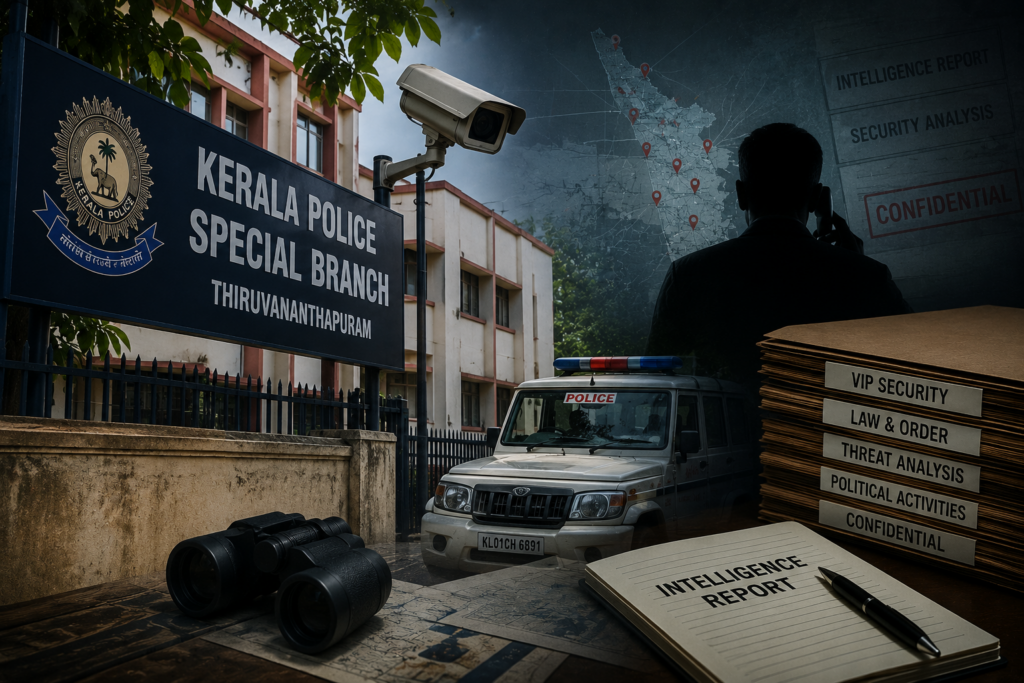









Crime Stories & Investigation Reports


Kerala Crime News: Uncovering the Reality Behind the Headlines
The Hidden Truths in Kerala Crime News Investigations
Damp paper. Stale filter coffee. That sharp scent hits you the second a fresh police dossier cracks open. Chasing the reality behind screaming evening broadcasts takes sweat. Grit. Not just a casual screen scroll.
We must tear down the facade. The squad room runs on raw evidence collection, quiet forensic breakthroughs, and bruising courtroom clashes. Wading through the tangled mess of Kerala crime news takes a surgeon’s scalpel. You slice the local gossip away from cold, verified case files. Every crime case report Kerala files provides an unfiltered look at the escalating arms race. Street-level offenders against the sworn officers hunting them.
Four months. That is how long we sat with dusty court records. We drank endless cups of tea with retired detectives, grasping the way they stack these massive cases. Brick by heavy brick.
Deciphering the Digital Trail in Cyber Crime
Forget the ski masks. Ditch the sawed-off shotguns. Modern bank robbers wear hoodies and write code. Look at the 2023 financial fraud ring running out of Ernakulam. Those thieves moved with chilling speed.
They constructed a shadow network of encrypted messaging chats and decentralized crypto exchanges. They quietly drained 45 million rupees from ordinary people. The state police hit back hard, pulling the Thiruvananthapuram cyber-dome unit in to tear the operation apart. Detectives booted up Chainalysis software. They chased the stolen digital currency as it bounced across three separate continents.
Then came the slip-up.
One single gang member forgot to mask his IP address before logging into a virtual private network. A microscopic mistake. Yet, it handed the cyber unit a physical address tucked away in a quiet Kochi suburb. Doors flew open. The raid netted 150 hard drives and slapped handcuffs on six lead programmers. Sorting through two terabytes of raw data laid bare the exact scripts the gang wrote to fire off automated phishing emails. That 1,200-page charge sheet became a textbook on prosecuting digital theft. It proves geographical borders mean absolutely nothing to local detectives anymore.

Forensic Triumphs in High-Profile Cold Cases
When studying high-profile Kerala crime news, one fact remains constant. People lie. Blood does not.
The Rajiv Gandhi Centre for Biotechnology deciphers the region’s toughest DNA puzzles, spinning invisible traces into hard facts. Consider a brutal 2021 homicide in Palakkad. The trail went ice-cold for six agonizing months. Nobody saw a thing. The main suspect strutted around with an ironclad alibi, swearing he was towns away when the victim fell. Then the script flipped.
Lab technicians found a single speck of blood drying quietly on the inside of his leather watch strap. Reading that blood spatter changed everything in the courtroom. The arc and speed of that solitary droplet showed the suspect stood less than two feet from the victim at the moment of the strike. Mitochondrial DNA testing locked down the victim’s identity with 99.9 percent certainty. Trial records show how that tiny biological anchor dragged the suspect’s entire fake story down into the depths. This is why locking down a crime scene immediately matters so much. One careless boot print can ruin months of exhausting detective work.
The Anatomy of Gold Smuggling Interceptions
Cochin International Airport acts as a giant funnel for global contraband. The cartels running these routes never stop testing the fences.
They ditched false-bottom suitcases decades ago. Just last November, customs agents snagged 30 kilograms of dirty gold. The smugglers had melted and molded the fortune into gears and pipes for commercial espresso machines. They even treated the metal chemically to blind the standard security scanners.
This bust had nothing to do with luck. It capped off three weeks of tense observation sparked by a nervous local informant. Intelligence handlers tracked the gang’s flight habits, matching passenger manifests against shady shell corporations operating in the Middle East. Baggage screeners received explicit orders to hunt for dense, oddly shaped shadows lurking in the heating coils of the coffee makers.
Handcuffs clicked.
That raid crushed a quiet supply line that had beaten airport security for over a year. The raw logs from that night give the next crop of border guards a priceless playbook on smuggler tactics.
Community Intelligence and the Beat System
Cold machines and spinning cameras fail to capture the pulse of the streets. Human trust does.
Neighborhood policing efforts like the Janamaithri Suraksha Project draw out quiet whispers that no camera could ever pick up. Beat cops walk specific blocks. They drink tea and swap stories with the merchants and families living there. It works. Just last month, Kozhikode saw a huge narcotics raid. The spark came from a tired tea stall vendor. He spotted weird shadows moving around an abandoned warehouse long after midnight.
He passed the tip to his local beat cop the next morning. That whispered conversation gave the anti-narcotics squad exactly what they needed to set up hidden sniper hides around the warehouse walls. For five sleepless nights, detectives logged the plates of every single car that breached the gates. They finally hit the compound, hauling out 50 kilograms of synthetic drugs and tearing down a distribution web spanning three districts. It shows us the raw truth. A wide-awake neighborhood remains the absolute best alarm system against organized crime.

Final Takeaways on Investigative Realities
Real police work is rarely glamorous. It lacks the flashy pacing of evening television dramas. Catching criminals demands a grinding mix of digital hunting, microscopic trace collection, and listening to the streets.
The only real way to grasp these cases dominating recent Kerala crime news is to read the raw court filings and the heavy charge sheets. Justice is not a movie montage. It is the quiet, exhausting grind of logging facts, protecting evidence from contamination, and dropping absolute proof onto a judge’s desk.